OEM vs ODM: What's the Difference?
OEM starts with your design; ODM starts with theirs. A side-by-side breakdown of both manufacturing models and which one fits your brand.
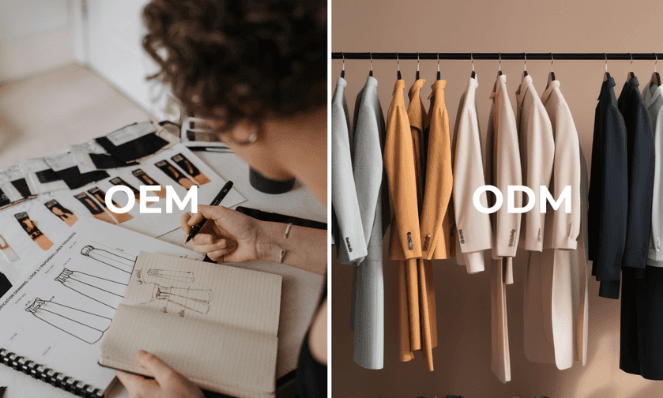
Get a Custom Quote →OEM (Original Equipment Manufacturer) means the factory builds your product exactly to your own design and specifications - you provide the tech pack, they execute it. ODM (Original Design Manufacturer) means the factory offers its own existing designs or patterns, which you customize with your branding, colors, and labels. The short version: OEM starts with your design, ODM starts with theirs.
OEM Manufacturing Explained
In an OEM relationship, you bring a tech pack - detailed specs covering fabric, measurements, manufacturing details, trims, and stitching - and the factory manufactures it exactly as specified. You own the design; the factory is executing your intellectual property, which is why NDAs matter in OEM work. This route gives you full control over fit, fabric, and manufacturing quality, but it requires you to already have (or be able to develop) a real tech pack, and typically involves a sampling round to confirm the factory has interpreted your spec correctly before bulk production.
ODM Manufacturing Explained
In an ODM relationship, the factory already has developed patterns, silhouettes, and sometimes full sample collections - you select from what exists and apply your own branding: your logo, your labels, your colorways, your packaging. This is a faster route to market since there's no tech pack development or first-round sampling from scratch, and it's a common way for new brands to launch a private label line without in-house design or pattern-making expertise.
OEM vs ODM: Side-by-Side
| OEM | ODM | |
|---|---|---|
| Who designs the product | You (via tech pack) | The factory (existing patterns) |
| Speed to first sample | Slower - pattern development required | Faster - pattern already exists |
| Design control | Full control over fit and manufacturing details | Limited to factory's existing base patterns |
| Best for | Brands with a specific, differentiated design | New brands wanting a fast, low-risk launch |
| IP considerations | You own the design - NDA is essential | Factory owns the base pattern; your branding is yours |
| Typical MOQ | Can be higher - new setup per design | Often lower - pattern setup already exists |
Which One Is Right for Your Brand?
If you already have a specific silhouette, fit, or manufacturing detail that's core to your brand identity, OEM is the right route - it's the only way to guarantee the product matches your exact spec. If you're launching a new private label line and want to get a real product to market quickly to test demand before investing in custom pattern development, ODM is usually the faster, lower-risk starting point. Many brands actually use both: ODM for a fast initial launch, then move specific hero styles to OEM once the design is proven and worth the investment in a custom pattern.
Frequently Asked Questions
Q: Can I start with ODM and move to OEM later?
Yes, this is common. Brands often launch with a factory's existing patterns to validate demand quickly, then invest in fully custom OEM development for their proven bestsellers.
Q: Does OEM always cost more than ODM?
Not always, but OEM typically involves more upfront cost in pattern development and sampling rounds, since the factory is building your design from scratch rather than adapting an existing one.
Q: Do I need a full tech pack to start an OEM order?
You need enough detail for the factory to build an accurate first sample - measurements, fabric specs, and manufacturing notes at minimum. A factory experienced in OEM work can often help refine an incomplete tech pack during the sampling round.
How We Handle Both at Helanza Ind.
We manufacture both ways: full OEM production from your tech pack, and ODM-style private labeling across our existing product range - tracksuits, jackets, uniforms, and activewear. If you're not sure which route fits your brand, tell us about your product and we'll recommend the faster path based on what you're trying to build.
Testimonials or Case Studies
Include testimonials or case studies that provide social proof. Real-life examples of success stories help build credibility and trust.
Jon Doe
Company Name • Founder
“Working with Helanza Ind. has been a game-changer for our business. Their team is incredibly knowledgeable and responsive, and they transformed our activewear line with low MOQs and exceptional stitching quality.”
Marcus Vance
Company Name • Sourcing Director
“Their tech pack assistance and fast 7-day sampling turned our initial mockups into production-ready team uniforms in record time. We couldn't be happier with the bulk quality and export delivery.”
Sarah Jenkins
Company Name • Product Lead
“Direct factory communication with Ali Hassan made all the difference. No middleman margins, transparent pricing, and 100% on-time delivery across our entire private label tracksuit line.”